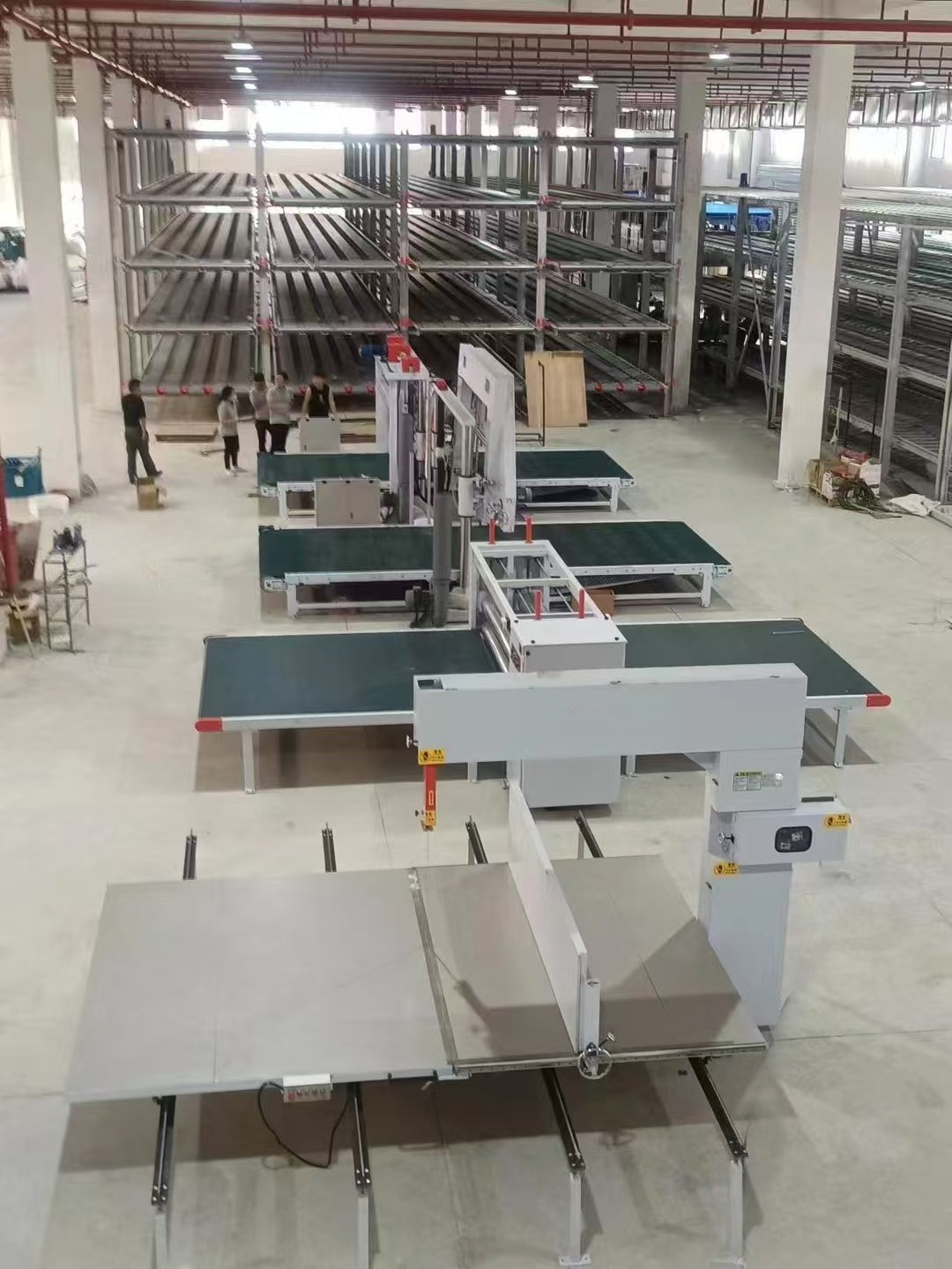


In the foam products industry, whether you are manufacturing mattresses, furniture, packaging, acoustic materials, or technical foam, choosing the right CNC foam cutting machine is a critical decision. It directly affects product quality, production efficiency, and long-term cost control.
The right machine can significantly improve cutting accuracy and output capacity.The wrong choice, however, may lead to wasted investment, operational inefficiency, and production bottlenecks.
This article takes a practical, production-oriented approach to help you understand how to select a CNC foam cutting solution that truly fits your manufacturing needs.
1.Clearly Define Your Foam Material and Product Type
The first step in machine selection is always to clearly understand what you are cutting and what you need to produce.
In CNC foam cutting, the cutting direction (infeed and outfeed) and processing method vary depending on whether you are mainly cutting foam sheets, 2D/3D contoured shapes, or a combination of different product types.
Foam Sheets
Foam sheets are widely used in packaging, filtration, insulation, and soundproofing industries. These applications typically require:
- Consistent thickness
- Smooth and even cutting surfaces
- Stable, continuous cutting performance
For this type of production, efficiency and repeatability are usually the top priorities.
External Contour Products (2D / 3D)
Examples include:
- Mattress outer contour cutting
- Acoustic foam shaping
- Various 2D or 3D foam components
These products require machines capable of handling complex curves and precise contour paths, making CNC contour cutting systems an essential choice.
Internal Contour Products
Such as:
- Protective foam inserts inside packaging boxes
- Customized cushioning foam
- Complex 3D internal cavity products
These applications place higher demands on cutting path control and precision. The machine structure and CNC configuration must be selected based on the specific shape and processing method.
The product form directly determines whether a CNC control system is required and what machine structure is most suitable.
- Cutting Thickness: A Key Parameter You Should Never Ignore
Cutting thickness is often underestimated during the early selection stage, yet it is one of the most important technical factors.
- Foam sheets thicker than 8 mm
High-speed foam sheet cutting machines are well suited for this range. They offer high efficiency and are ideal for continuous, large-volume production.
- Ultra-thin foam sheets below 8 mm
These applications require higher cutting stability and precision. Foam disc cutting machines or specialized high-precision cutting solutions are generally more suitable.
Operating a machine outside its optimal cutting thickness range can lead to poor cutting quality, faster blade wear, and increased material waste.
- Can the Machine Integrate into an Automated Production Line?
Modern foam factories are rapidly evolving from standalone machines to integrated production systems.
Instead of focusing only on a single machine, it is more important to ask:
Can this equipment be integrated into my overall production workflow?
Common production line combinations include:
- Foaming line + foam block cutting machine + trimming machine
- High-speed foam sheet cutting machine + automatic conveying system + contour cutting equipment
Machines designed with automation interfaces and future expansion capability make it easier to build semi-automatic or intelligent workshops, significantly reducing labor dependency and improving production stability.
- CNC System Usability Determines Long-Term Efficiency
A good CNC foam cutting machine should simplify operation, not increase complexity.
When evaluating CNC systems, pay close attention to:
- Support for CAD drawing or file import
- Availability of automatic nesting and path optimization
An intuitive and easy-to-use CNC system helps:
- Reduce operator training time
- Minimize human error
- Improve overall cutting efficiency and consistency
- After-Sales Service Determines the Machine’s Service Life
The true value of a CNC foam cutting machine is proven during long-term, stable operation, not just on the day of delivery.
Reliable suppliers typically provide:
- Remote technical support and troubleshooting
- Long-term and stable spare parts supply
- Fast response and effective problem-solving capability
Consistent after-sales support ensures that the machine continues to operate efficiently throughout its entire service life.
- Customization Is Often More Important Than Expected
Every factory has different materials, product structures, and production processes. In many cases, the most suitable CNC foam cutting machine is one that is customized to actual production requirements.
From a long-term perspective, equipment that closely matches your real needs will always be:
- More efficient
- More stable
- More cost-effective than a generic, one-size-fits-all solution
Conclusion
Choosing the right CNC foam cutting machine is not about selecting the most expensive model or the fastest machine available. It is about choosing the machine that best matches your:
Foam material type × Cutting thickness × Production capacity × Automation plan × Long-term development goals
When these factors are aligned, the machine becomes more than just equipment—it becomes a reliable partner that supports stable production and sustainable growth.
For more information, please feel free to contact us at any time. We will recommend the most suitable CNC foam cutting solution based on your actual production needs.